
The Third Cup: After Everything Has a Name
AI Summary
*Names didn't create the world. They connected us to it.* --- It was three in the afternoon. The café was quiet. A customer was sitting by the window, his laptop open. He stared at the screen, typed a few lines, deleted them, then started again. He had been at it for quite a while. I brought his...

Names didn't create the world. They connected us to it.
It was three in the afternoon. The café was quiet.
A customer was sitting by the window, his laptop open. He stared at the screen, typed a few lines, deleted them, then started again. He had been at it for quite a while.
I brought his coffee over.
"Code giving you trouble today?"
"The code is fine. I'm the one who's not happy."
"What's wrong?"
"Variable naming. This one's called data, that one's also called data, and another one is called result. I can understand them now, but when I come back in a few months, I'll probably have to do some archaeology on my own code."
I laughed.
"At least you remember writing it."
"Last week I found a variable called final_result_new_v2."
"Then there must be another one called final_result_new_v2_really_final."
He looked up at me.
"Have you been secretly reading our company's codebase?"
"No need. I can guess."
He took a sip of coffee, then picked up the menu on the table.
"By the way, there's something I've been meaning to ask you."
"What is it?"
He pointed at the menu.
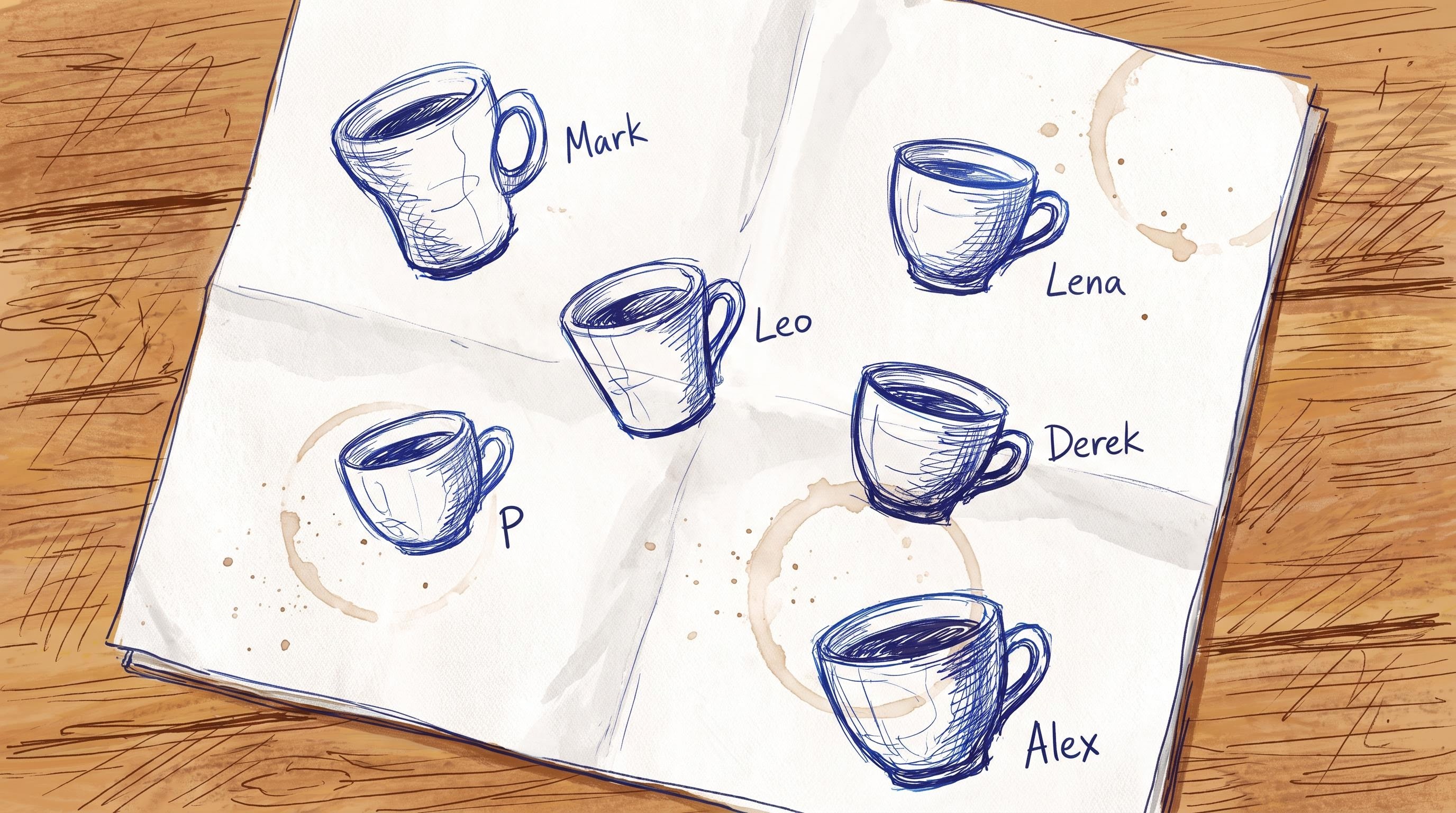
"Why do all six coffees on your menu have a person's name beside them?"
I glanced at it.
"You mean those names?"
"Yes. The pour-over says Mark, the espresso says P, and there are a few others. Are those the baristas' names, or did they come up with the recipes themselves?"
"Neither. Each one belongs to one of my regulars."
He looked up.
"You actually name coffees after your customers?"
"More or less. Each of them has their own usual coffee. When they come in, I know what to make."
He looked at the menu again.
"So they don't even have to order?"
"After a while, I don't even need to ask what they want."
He laughed.
"Your café's naming system is more complicated than our variable naming."
I looked at the six coffees on the menu, each with a regular's name beside it.
"Actually, names are more interesting than people think."
I walked over to the bookshelf and took down an old copy of the Tao Te Ching.
"Speaking of names, that reminds me of something Laozi wrote."
I opened the book to Chapter 42 and placed it in front of him.
"The Dao gives birth to One. One gives birth to Two. Two gives birth to Three. Three gives birth to the ten thousand things."
He read it once.
"Can that solve my variable naming problem?"
"I can't promise it'll fix your bugs, but we can talk about it."
"Go ahead. The code isn't going anywhere."

From One to Two
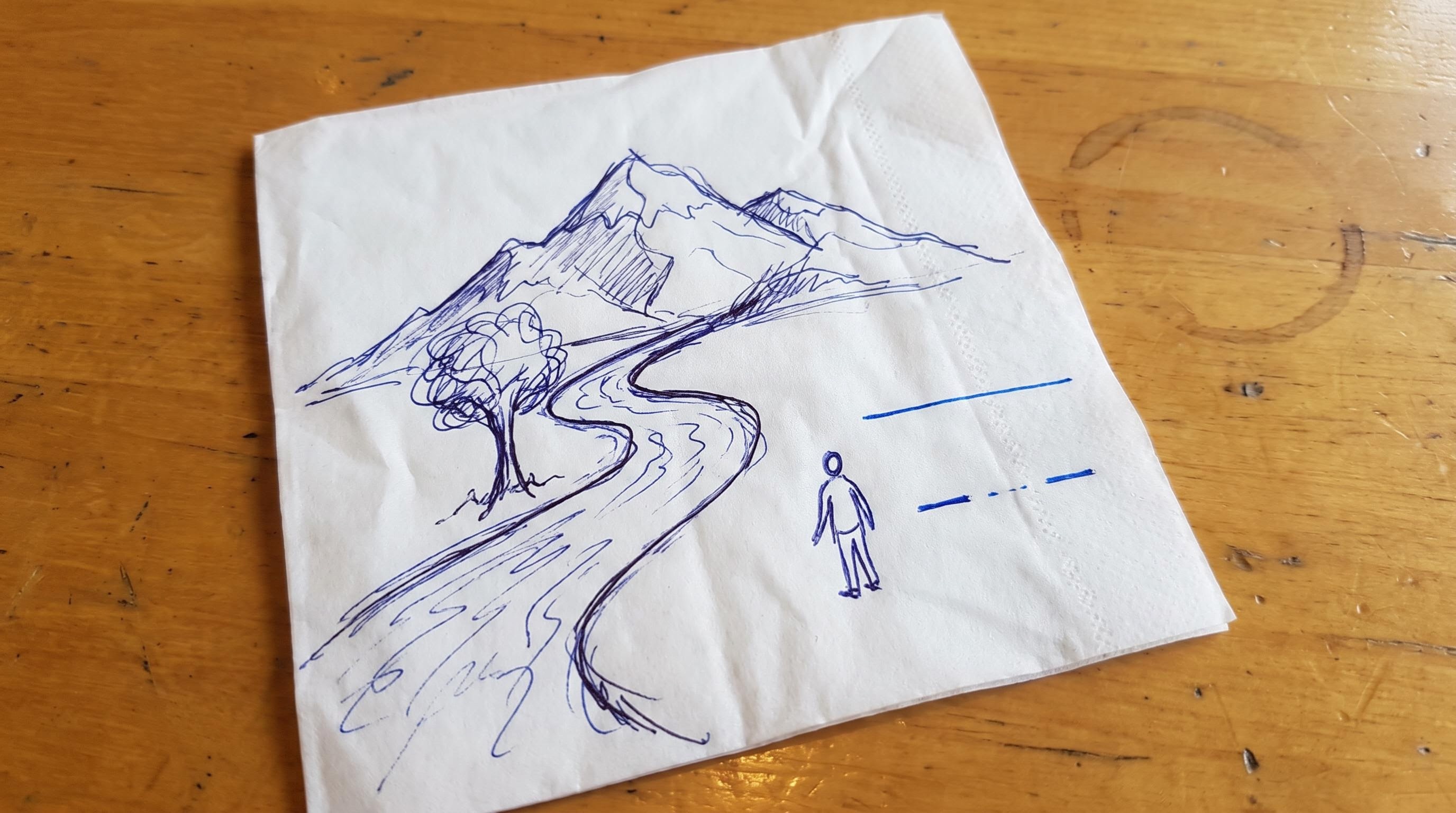
I drew one solid line and one broken line on a paper napkin.
"In my understanding, the One here is the Dao, and the Two are Yin and Yang."
"I know Yin and Yang. That black-and-white fish symbol, right?"
"That's the one. Light and darkness, movement and stillness, above and below, cold and heat. They're different, but they depend on each other and keep changing in relation to each other."
He looked at the two lines.
"So, one is 1 and the other is 0?"
"We can use binary as a modern analogy, but they're not exactly the same thing. Yin and Yang aren't just two fixed states. The relationship between them matters too."
He nodded.
"Got it. You're explaining ancient philosophy through modern IT."
"Just finding a familiar way in. Don't go around telling people Laozi was a programmer who never open-sourced his code."
He laughed.
"Maybe he just kept the repository private."
So, What Is the Three?
I drew a little human figure beside the two lines.
"Now, the Three is where I have my own interpretation."
He looked at the napkin.
"Wait. Does the original text actually mention human beings?"
"No. This is my own reading. Laozi doesn't spell it out that way."
"So you're adding a new requirement to Laozi's spec?"
I laughed.
"Do programmers always want to submit a change request when they hear something new?"
I continued.
"To me, the Three is the human being alongside Yin and Yang. Yin and Yang were already part of the world. When human beings appeared, we started observing things, telling them apart, and giving them names."
"But everything already existed before humans showed up, didn't it?"
"Of course. Mountains, rivers, trees, birds and animals didn't wait for us to appear."
I pointed out the window.
"That mountain was already there. The river was flowing. The trees were growing. We didn't create any of them. We just started giving them names."
He thought about it for a moment.
"So the names let us recognize things, remember them, and talk about them with other people?"
"Exactly. Without names, how would you tell me which mountain you climbed or which tree you saw on your way here?"
He nodded.
I wrote a sentence on the napkin:
The world existed long before us. Through naming, we found a way to connect with it.
He glanced at it.
"That's pretty good. Better than any of my variable names."
"Your variable names aren't beyond saving."
Six Coffees, Six Names
Speaking of naming, I looked toward the menu beside the counter.
"Those six coffees you asked about are another example."
He turned around.
"How so?"
"Well, they started out as six different coffees. Then six people kept coming back, each with their own favorite. After a while, I started putting their names beside those drinks on the menu. Mark has the pour-over. P has the espresso. The others have their own favorites too."
"What if Mark wants an espresso one day?"
"Of course he can have one. It's a menu, not a life sentence."
He laughed.
"I thought you were going to make him drink pour-over for the rest of his life."
"That would be a quick way to put this café out of business."
We both laughed.
I glanced at the menu again.
"Now, when I see those names, I think of the people behind them. Sometimes I remember a conversation, an argument, or something that happened here. A few names can bring back quite a lot."
He looked at the menu.
"So the coffee comes with a memory?"
"Something like that. The coffee is still coffee. But those names mean a little more to me now."
He nodded.
"Kind of like variables in code. The value is there, and the name helps whoever comes later understand what it represents."
"Exactly. Though a name can be misleading too. Just because a field has a certain name doesn't mean it actually does what the name suggests."
"We have plenty of those in our project."
"I believe you."
Beyond Names
He closed his laptop and picked up his cup.
"Does that apply to people too? Engineer, tester, product manager... those labels don't tell you everything about someone?"
"Not even close. They tell you what someone does, but they don't tell you who that person is."
He smiled.
"So I shouldn't use job titles to label people anymore?"
"You can know what someone does. Just don't assume you've figured them out because you know their job title."
"Maybe I should give myself a new title."
"What would that be?"
"Coffee enthusiast."
I glanced at his empty cup.
"That one has some evidence behind it."
He laughed and shook his head.
I turned the napkin over.
Names help us understand the world, but they can't replace the world itself. We give things names so we can talk about them and share what we know. That doesn't mean a name tells us everything.
He looked at the Tao Te Ching on the table.
"What comes beyond names, then?"
"Plenty. Let's save that for another cup."
A Regular Walks In
The bell above the door rang.
I looked up. Mark had walked in.
He glanced at the counter, then at the Tao Te Ching on the table.
"What are you talking about today?"
"Names. And the stories behind them."
Mark didn't ask anything else. He simply walked over to his usual seat.
I didn't ask what he wanted.
I picked up the pour-over kettle, ground the beans, warmed the cup, and started pouring.
The water flowed gently over the coffee grounds, and the aroma slowly filled the space.
A little later, I placed a pour-over in front of him.
Mark looked at the coffee, then at me.
"I haven't ordered yet."
"I know."
I smiled.
"Some names don't need to be introduced every time."
He picked up the cup and took a sip.

The customer by the window looked at Mark, then back at the menu.
"So the Mark on the menu is him?"
"That's him."
"Well, now I know who's behind that coffee."
"You could say that."
He packed up his laptop and stood.
"Next time I come in, I want a spot on that menu too."
"I already know what you like," I said. "Your name just isn't on the menu yet."
He pointed at his empty cup.
"Isn't that enough to start with?"
I smiled.
"Come back tomorrow. We'll see."
He laughed, said goodbye, and headed for the door.
Mark was still working his way through his pour-over.
I picked up the empty cups and went back behind the counter.
P.S. English isn't my first language, so I use AI to help polish my writing and smooth out the rough edges. Thanks for reading.
P.P.S. The paperback edition of my earlier book is now available.